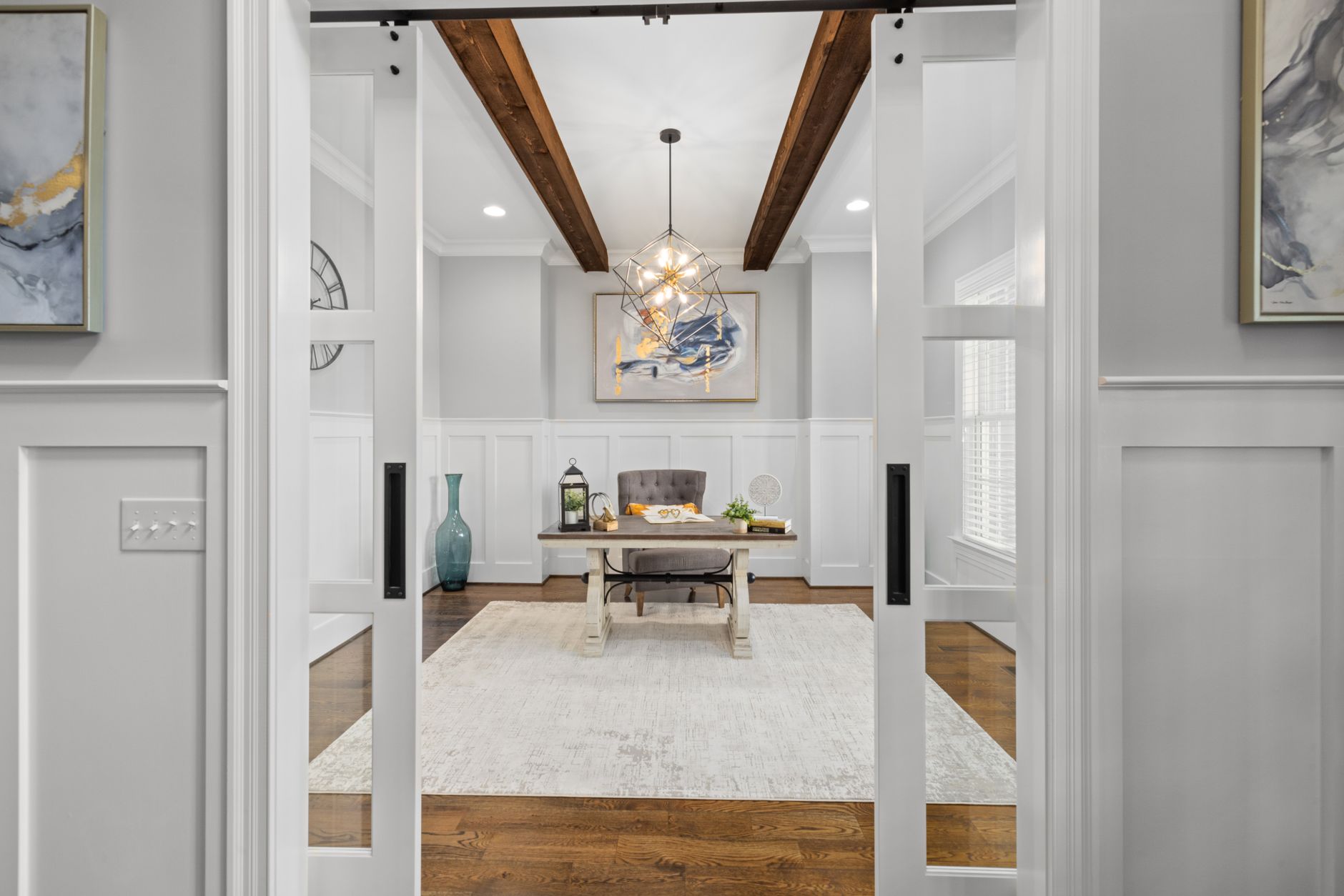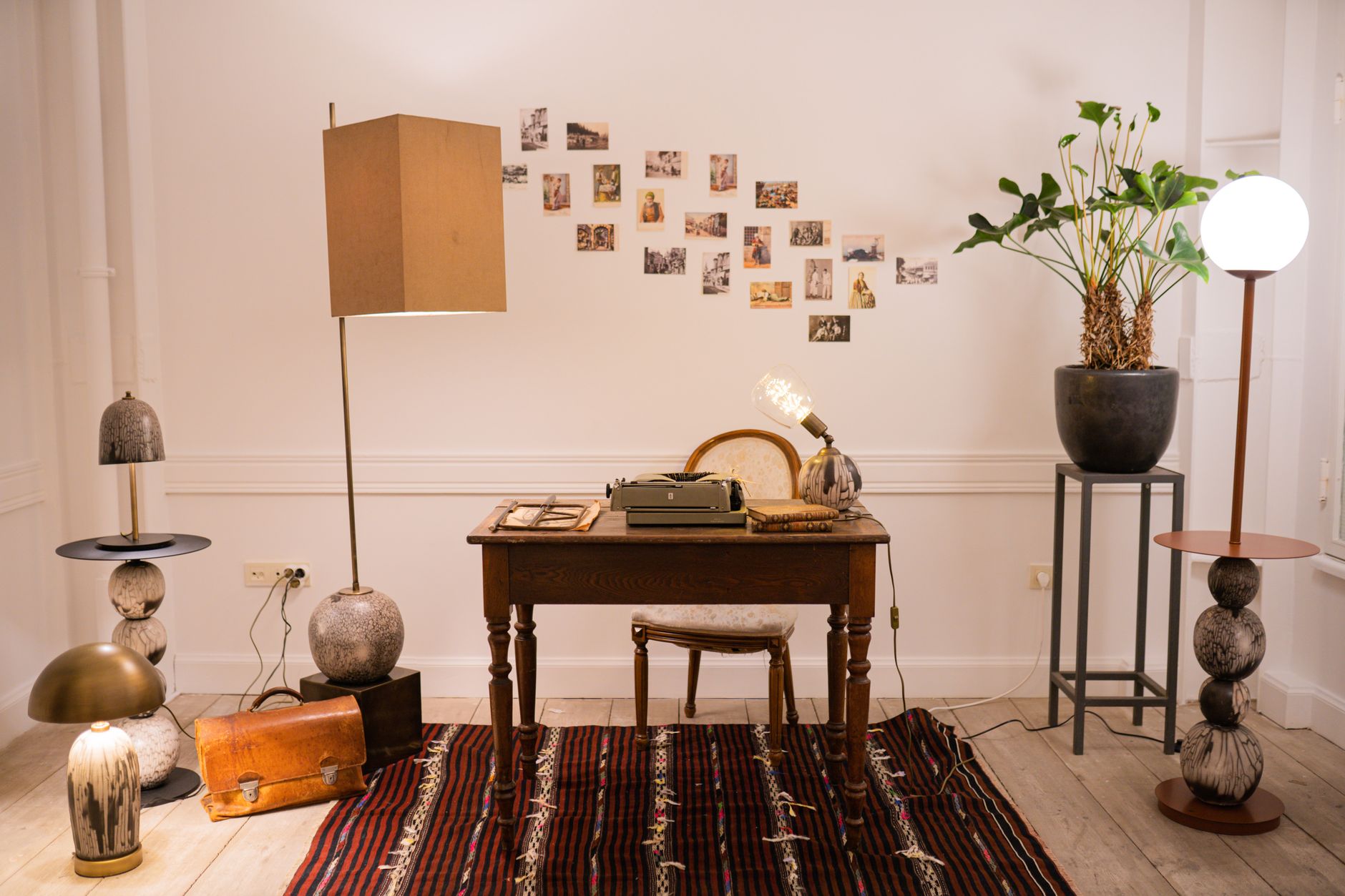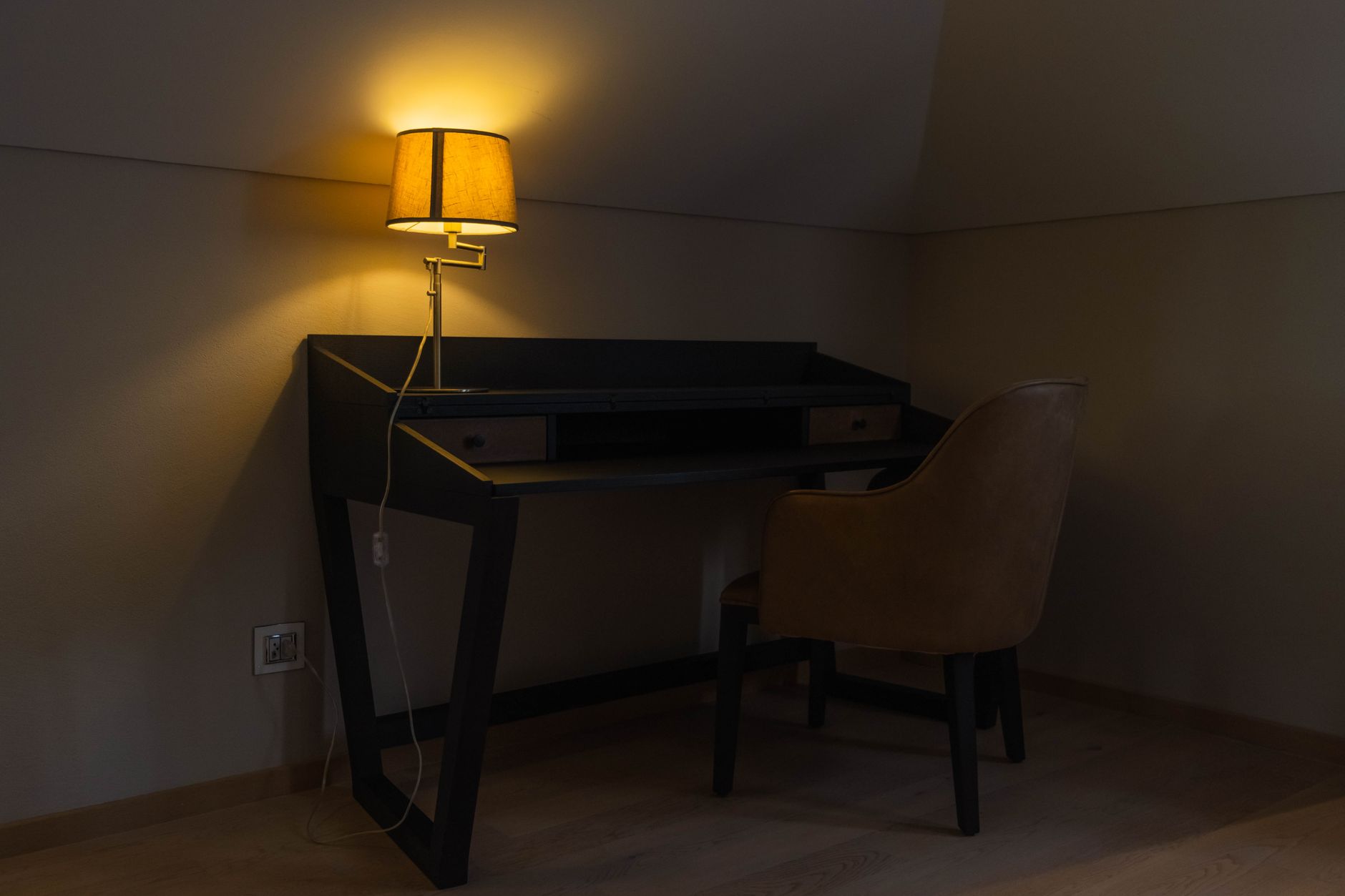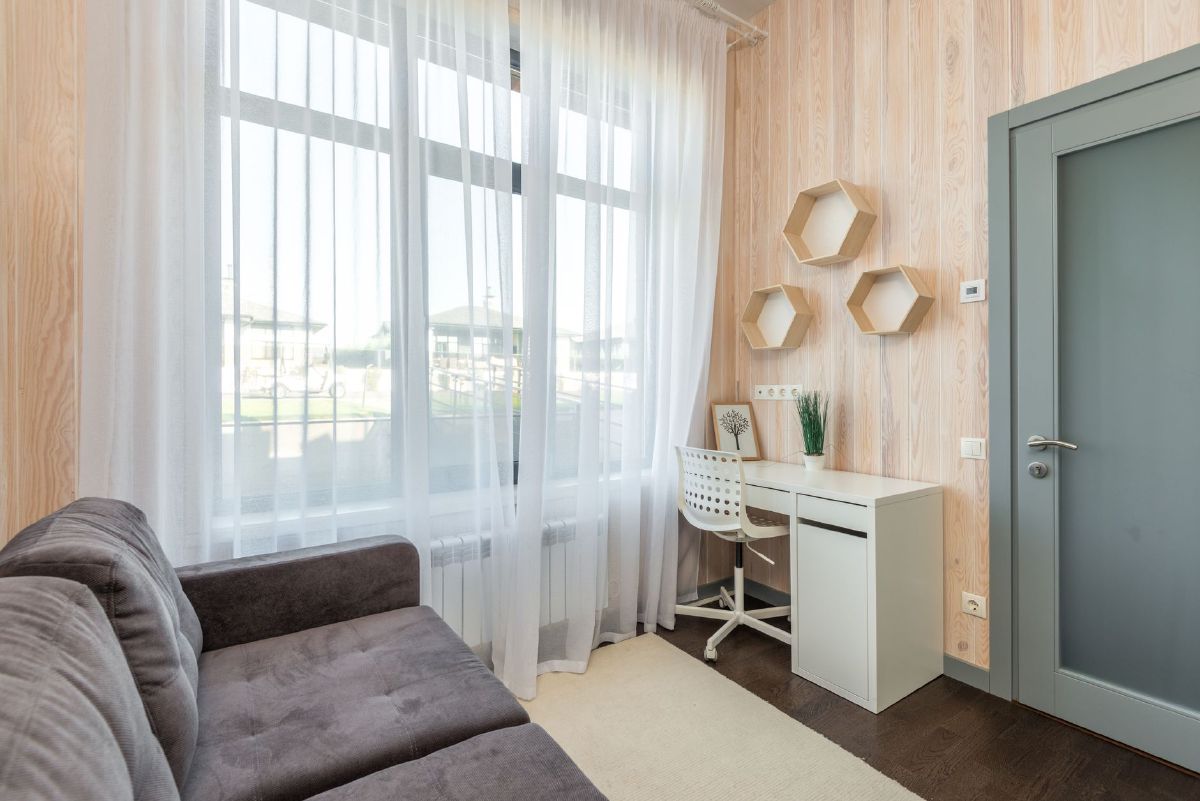
My real answer for a dim home office: move the desk before you buy anything. A window you’re not actually facing does almost nothing for you, and re-angling a desk costs nothing. Everything else in this guide, from sheer curtains to a full skylight, matters less than getting that first move right.
I’ve worked in offices with a wall of windows and offices with none at all, and the difference by 3pm is real: harsh screen glare and eye strain on one end, a flat grey room that saps focus on the other. This guide covers both, how to pull in more real daylight where you have it, and what to do when you don’t have much to work with.
Why natural light is worth the effort
Good daylight in a home office pays for itself beyond the electricity bill. It helps regulate your circadian rhythm, the internal clock that governs sleep, so you stay more alert through the afternoon instead of hitting a slump around 3pm. It also does something artificial light struggles to: full-spectrum daylight is genuinely easier on the eyes than staring at a screen under a single harsh overhead fixture for hours at a stretch. The mood effect is real too, a bright room just feels better to sit in, and the energy savings (less need for lamps while the sun’s up) is the part nobody has to be talked into.
Quick fixes that cost nothing but time
Start with where your desk actually sits. Facing the window, or having it to your side, does more for you than any amount of lamp shopping: it lights your face properly for video calls, kills the glare you get from sitting with your back to a window, and removes the shadows a side-lit desk throws across your keyboard. I’d fix this before anything else on this list.
A mirror hung on the wall opposite the window is the cheapest trick after that. It bounces daylight deeper into the room, and in a small or dark office the difference is bigger than people expect.
Heavy drapes are the next thing I’d swap. Sheer curtains, blinds, or a light-diffusing shade keep the room bright without the glare a bare window throws on a sunny afternoon, and unlike blackout curtains they don’t leave the room dim the moment you close them for privacy.
Paint and furniture color matter more than most people budget for. White or a pale, warm neutral bounces the light you already have around the room. A dark accent wall behind the desk, a look I otherwise like, eats a noticeable amount of that light, so if the room’s genuinely short on daylight, save the dark paint for a wall the window doesn’t face.
When it’s worth a bigger project
Once you’re past what curtains and paint can do, the next tier is architectural, and I’d only go here if the room genuinely doesn’t get enough light any other way.
A skylight is the biggest swing: a real roof window pulls in far more overhead light than anything on a wall can, and it’s especially effective in an attic office or a top-floor room with no wall space left for windows. The honest catch is cost and disruption. A skylight is a roofing job, not a weekend project, so get a contractor quote before you fall for the idea.
A light tube, also called a sun tunnel, gets you most of the brightness of a skylight for a fraction of the cost and mess: a reflective pipe that channels daylight from the roof down into the room. It’s a genuinely good option for a small, fully windowless office or an awkward room where a real skylight isn’t practical.
Glass partitions are what I’d reach for on an interior office, a room with no exterior wall at all. Swapping a solid door or wall for a glass one lets borrowed light in from an adjoining room. It won’t give you direct sun, but it beats a windowless box lit only by overhead fixtures.
Tech worth knowing about, even if you don’t need it yet
A few newer options are worth knowing even if they’re overkill for most offices. Daylight sensors read how much natural light is already in the room and dim or brighten your fixtures to match, so the room never swings between too-dark and too-bright as clouds pass overhead. Smart glass, also called electrochromic glass, lets you flip a switch or tap an app to go from clear to frosted, handy for instant glare control or privacy without hanging blinds, though it’s a genuinely expensive retrofit and makes more sense in new construction than an existing room. A light shelf, a horizontal ledge mounted high on the inside and outside of a window, reflects daylight up onto the ceiling and pushes it deeper into the room than a bare window manages alone. It’s a real architectural feature, worth planning into a renovation, not something you install on a weekend.
Layering light even in a bright room
Even with plenty of daylight, I still want a balanced setup that combines multiple sources, what lighting people call “layering,” because it’s what keeps the room comfortable once the sun moves or sets. Ambient light is the general, overall source: daylight during the day, then an overhead fixture or a torchiere floor lamp bouncing light off the ceiling once it’s dark. Task lighting is the focused light you actually work under, a desk lamp that adjusts easily enough to kill shadows and glare on the surface in front of you. Accent lighting is the extra: something highlighting art or shelving so the room reads as part of your home rather than a sterile box. I’ve written the fuller version of this in my guide to layering light in a home office, if you want the room-by-room detail.
Reducing glare around your desk
Glare is the quiet productivity killer: it makes you squint, strains your eyes, and pulls focus without you always noticing why. Never position your screen so it reflects a bright window or light source directly, facing the window or having it to your side (same rule as above) is still the fix that does the most. An anti-glare screen filter helps in a trickier layout where you can’t fully avoid a reflection. And when you do add a task lamp, put it on the opposite side from your dominant hand, otherwise you’re working in your own shadow. For the fuller placement breakdown, my guide to desk placement goes deeper into distance, angle, and video-call framing.
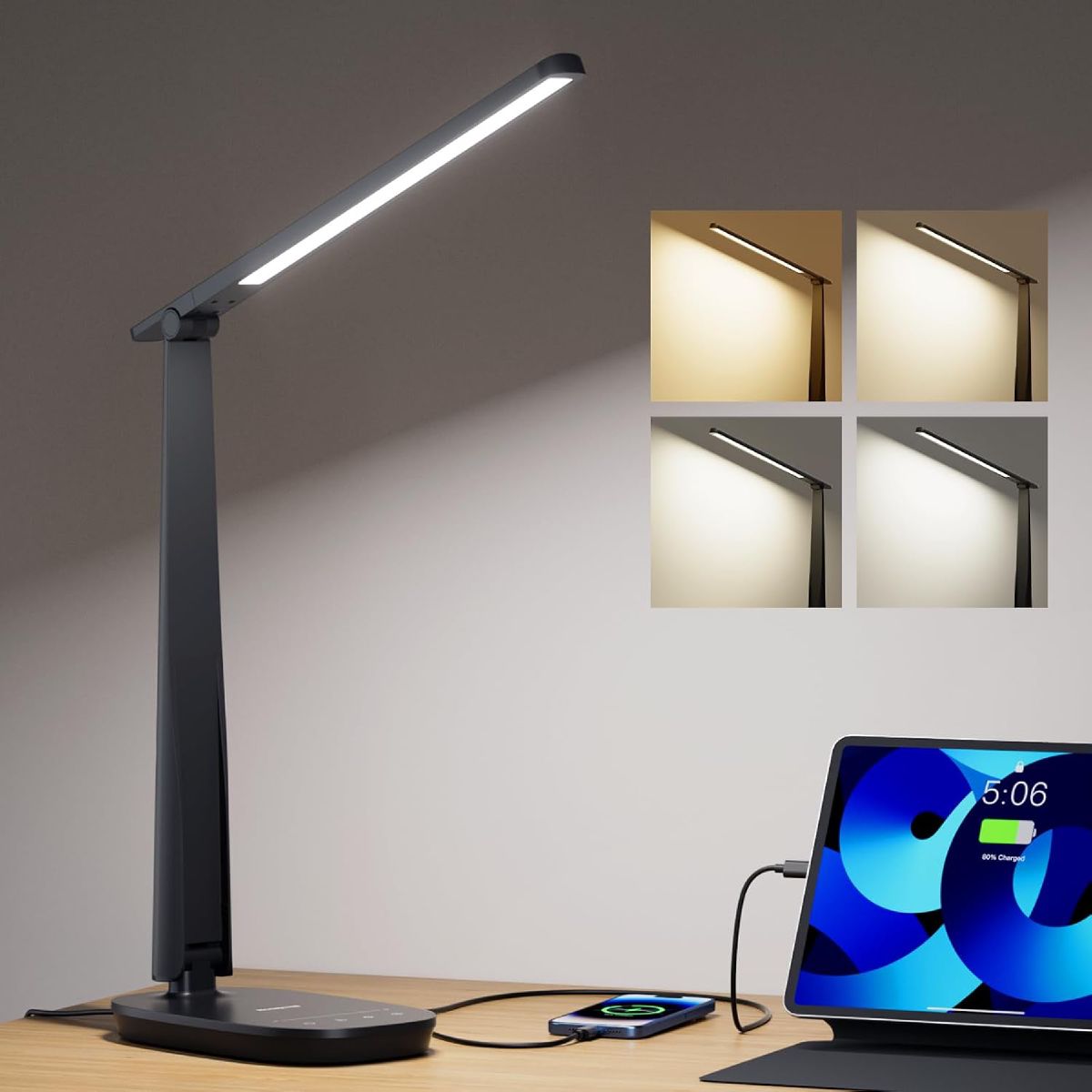
If your desk sits away from the window on a cloudy day or once the sun’s gone down, I wouldn’t rely on an overhead fixture alone to fill that gap. A dedicated task lamp placed correctly does more for glare and eye strain than any amount of ambient light. What makes the Honeywell LED Desk Lamp the right supplement to a daylight-led room is output quality: full-spectrum, flicker-free, CRI of 94 or better, so its pool of light blends with the real daylight around it instead of fighting it. Buyers have pushed it to 4.8 stars over 857 ratings.
 $32.29 $33.99 5% off price as of Sep 29
A niggle: colour temperature moves in four fixed presets rather than a continuous slide, so you match the changing sky in steps; brightness, at least, dims smoothly.
Buy the Honeywell LED Desk Lamp on Amazon
Quick wins checklist
Most of these cost nothing: moving the desk, clearing a windowsill, cleaning the glass. Do those first, then buy fixtures only for whatever gap is left.
- Move your desk to face the window, or keep it to your side.
- Hang a large mirror on the wall opposite a window.
- Swap heavy drapes for sheer curtains or a light-diffusing shade.
- Clear the windowsill so nothing’s blocking the light.
- Clean the windows. It sounds too simple to matter, and it still does.
- Add a task lamp for whatever gap is left once you’ve done the rest.
FAQs
What if I have no windows?
Focus on layered artificial light instead of chasing daylight that isn’t there: a mix of ambient overhead light, a bright task lamp, and accent lighting does most of the work. A light tube or skylight (above) is worth it if you’re willing to open the roof; if you’re renting or don’t want the construction, a “daylight” bulb that mimics the color temperature of real sunlight is the fastest fix, and it’s the route I’d actually take first in a windowless room.
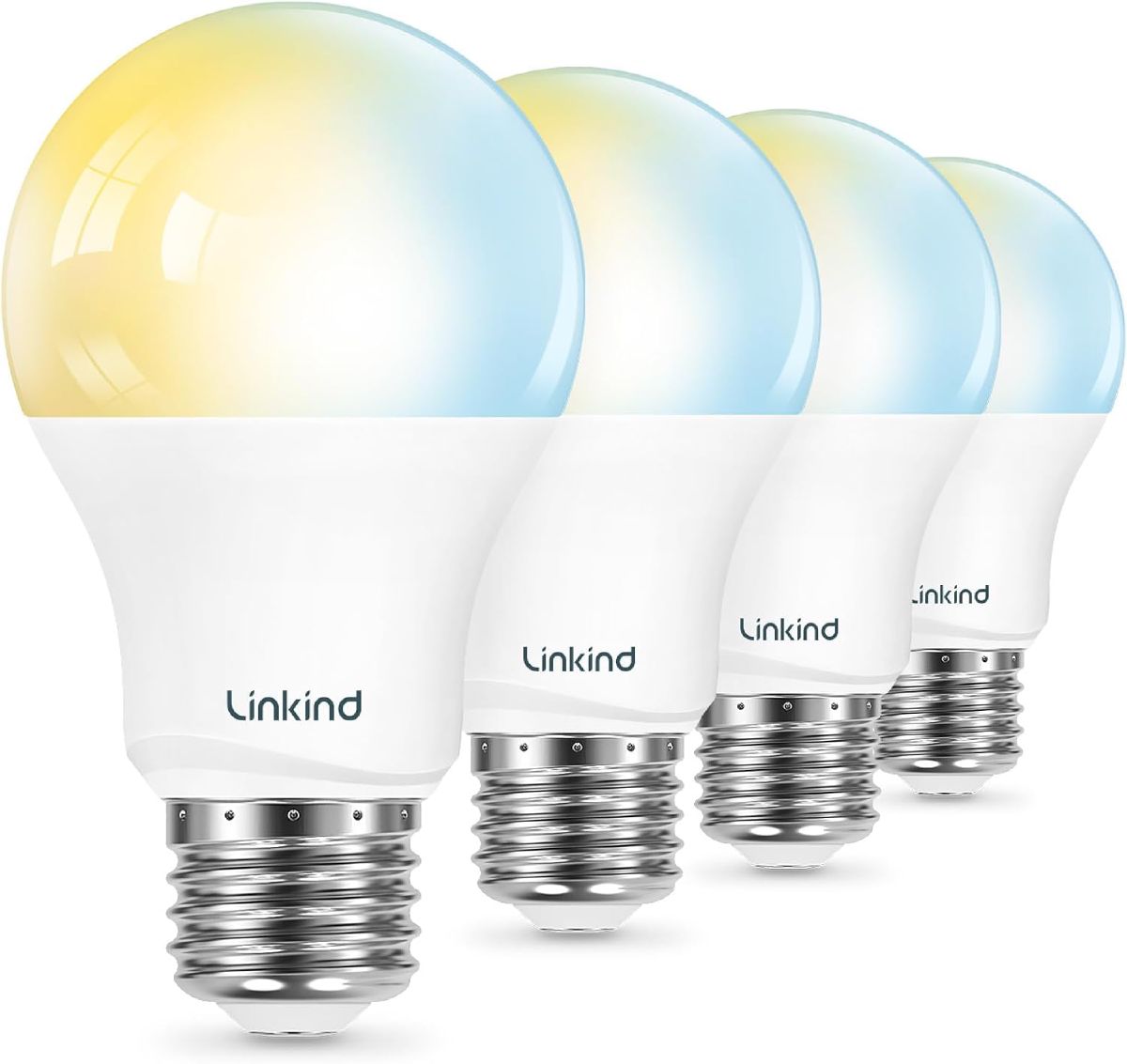
For that daylight-bulb route I’d use the Linkind tunable white smart bulb 4-pack: park the workday at a crisp, sun-mimicking 5000K-6500K, then let a schedule ease it down to a warm tone at night: one bulb, one fixture, both jobs. Its 4.5-star average over 500-plus ratings is a solid record for a budget smart bulb.
 $18.97 $29.99 37% off price as of Sep 29
Fair warning: “tunable white” is literal. This bulb does whites only, no colours, which suits sunlight-mimicry perfectly but won’t stretch to mood or accent lighting later on.
Buy the Linkind Smart Bulb 4-Pack on Amazon
How do I avoid glare on my screen?
Position your desk so your monitor isn’t directly reflecting a window. If that’s not possible in your room, sheer curtains or blinds diffuse the light enough to help, and an anti-glare screen protector does more than you’d expect for the cost.
What are the best colors for reflecting light?
White reflects the most, followed by pale off-white, light gray, and soft pastels. These bounce light around the room rather than absorbing it, which is what makes a light-colored room feel bigger and brighter than the same room painted dark.
What is the best overall lighting for a home office?
A combination: maximize the natural light you actually have first, then layer in artificial ambient, task, and accent lighting to cover what daylight can’t reach or the hours after it’s gone. For the complete room-by-room version of that approach, see my Ultimate Guide to Home Office Lighting.