The right dining room lighting comes down to three decisions: which fixture type fits your table and ceiling, what size to buy so it neither disappears nor dominates, and whether you’ve layered in a dimmer so the room can go from homework-bright to dinner-party-soft without a second fixture.
Your dining room works harder than most rooms in the house: family dinners, holiday gatherings, quiet morning coffee. The furniture sets the stage, but the lighting decides whether the room feels warm or just… lit. Here’s how I’d work through fixture type, sizing, layering and style, plus a few picks I’d actually put over a table.
1. Which fixture type actually fits your table
I’d start with the table, not the ceiling. A chandelier is the classic choice: it lights the table and doubles as the room’s decorative centerpiece, and it earns that role best in a formal dining room or one with real ceiling height. Go smaller-scale and it just looks lost.
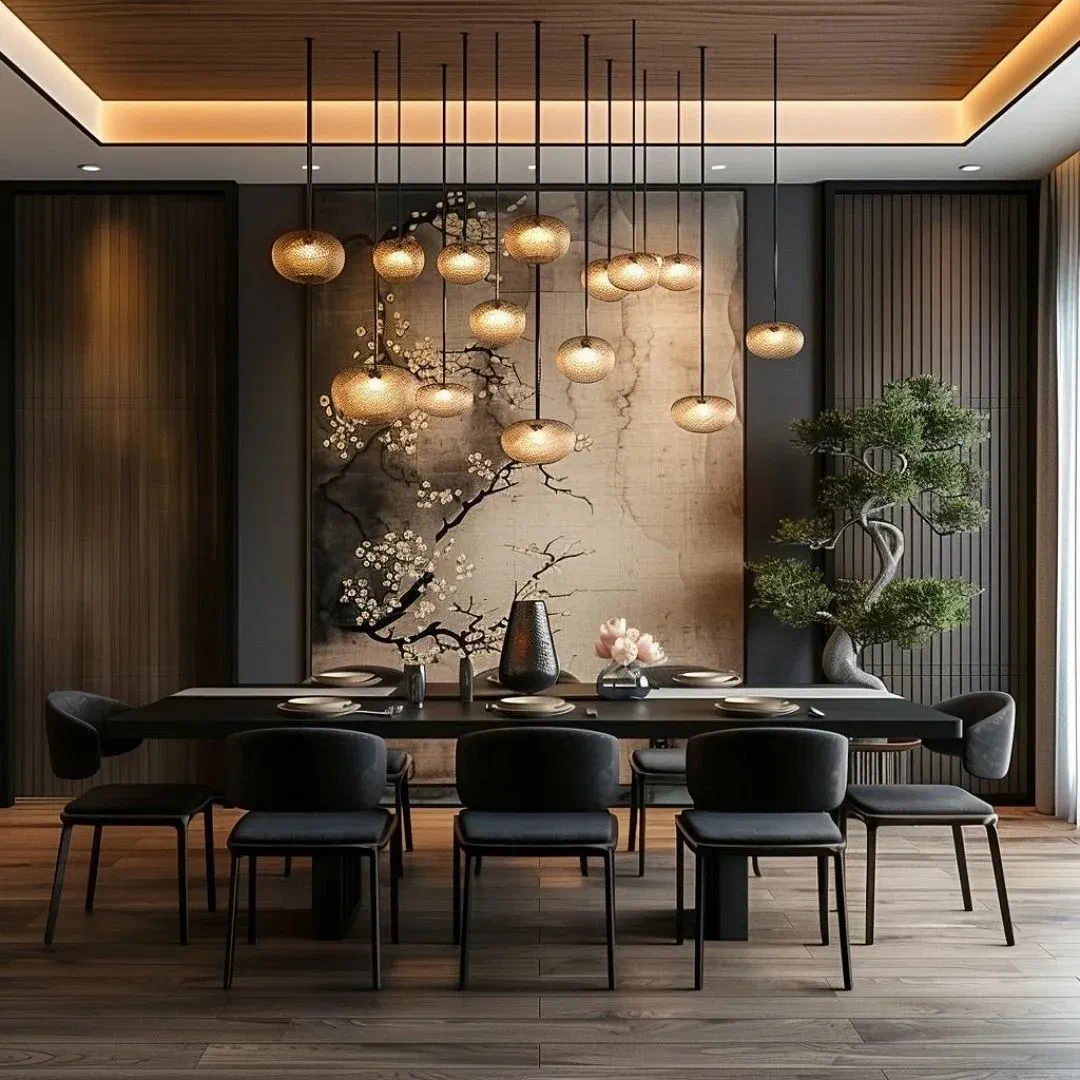
Pendants are the more versatile pick for most modern dining rooms: a single large one for a minimalist look, or several grouped at staggered heights for something more sculptural. Linear pendants, essentially several bulbs on one long bar, are the right call over a long rectangular table specifically because they spread light evenly down its length instead of leaving the far seats dim.
Low ceiling? Skip pendants and chandeliers and go flush or semi-flush: flush mounts sit directly against the ceiling, semi-flush hangs down just slightly, and both give you real ambient light without eating vertical space. Wall sconces I’d treat as a supporting player rather than the main event: they’re better for a warm accent glow or highlighting artwork than for lighting the table itself, and they need a primary fixture alongside them.
2. The Golden Rules of Size & Scale
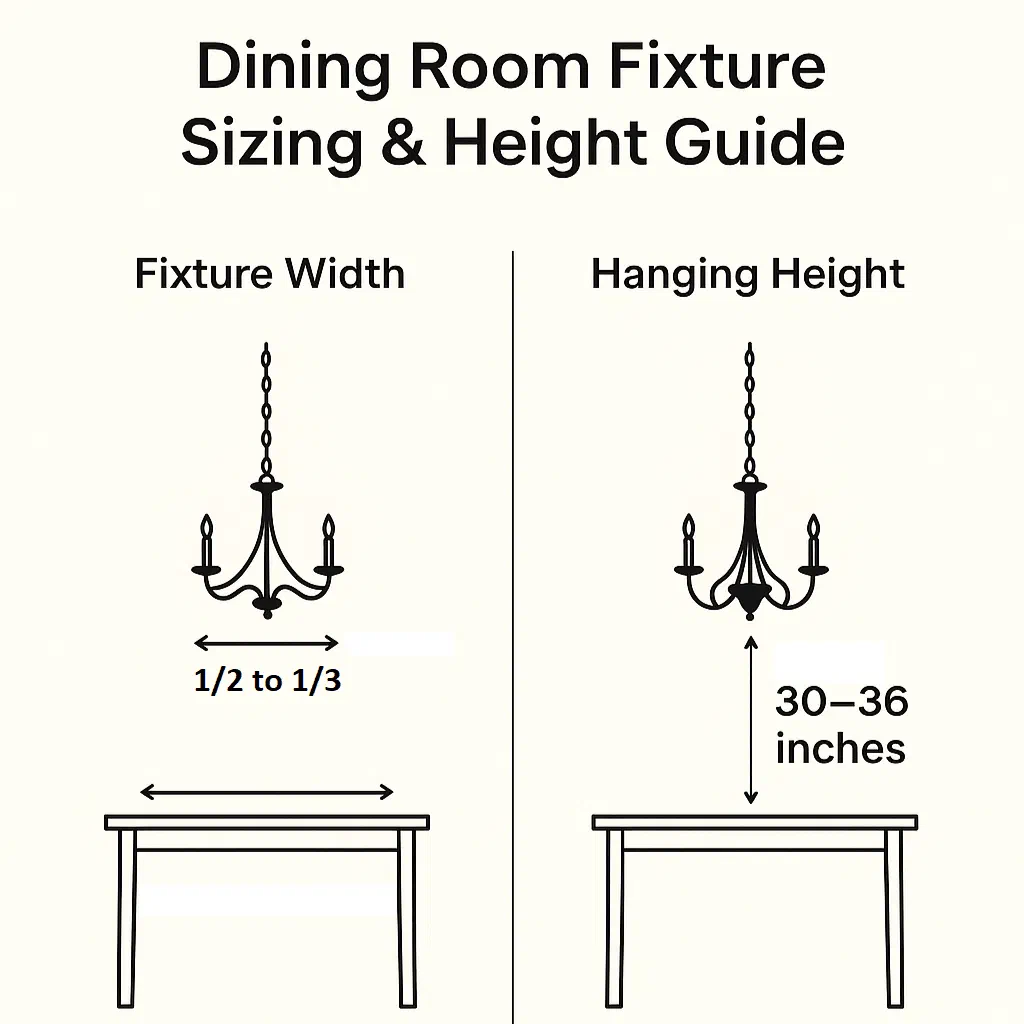
Getting the size of your fixture right matters as much as the style. A chandelier that’s too small will look lost, while one that’s too large can overwhelm the room.
- Fixture Width: A good rule of thumb is that the fixture’s width or diameter should be between one-half and two-thirds the width of your dining table. This ensures the light is centered over the table and provides ample illumination without a risk of bumping your head.
- Hanging Height: The ideal height for a fixture is typically 30–36 inches above the tabletop. This height provides a good balance, illuminating the table without creating glare in the eyes of diners or obstructing conversation. For very high ceilings, you may need to hang the fixture a bit higher to maintain a sense of proportion.
3. Why one fixture is rarely enough
A single chandelier working alone is the most common dining room lighting mistake I see. Your main fixture, whether that’s the chandelier, pendant or flush mount, gives you the room’s baseline ambient light. Task lighting is less common in a dining room, but a bright pendant or a few focused downlights over the table earn their place: they’re what actually keeps food and faces well-lit rather than just the room in general. Accent lighting, a wall sconce or a recessed spotlight aimed at artwork or a hutch, is the layer that makes a room feel considered rather than just lit.
The one piece I wouldn’t skip on any of it: a dimmer. It’s the cheapest upgrade in this whole guide, and it’s the difference between a room that’s bright enough for homework at 4pm and soft enough for a dinner party at 8, without touching a single fixture.
4. Style Inspiration: Ideas for Every Aesthetic
I’d pick the fixture’s style before I’d pick its brightness. A chandelier is the one piece of furniture-scale decor in most dining rooms, so it needs to earn its place visually as well as light the table.
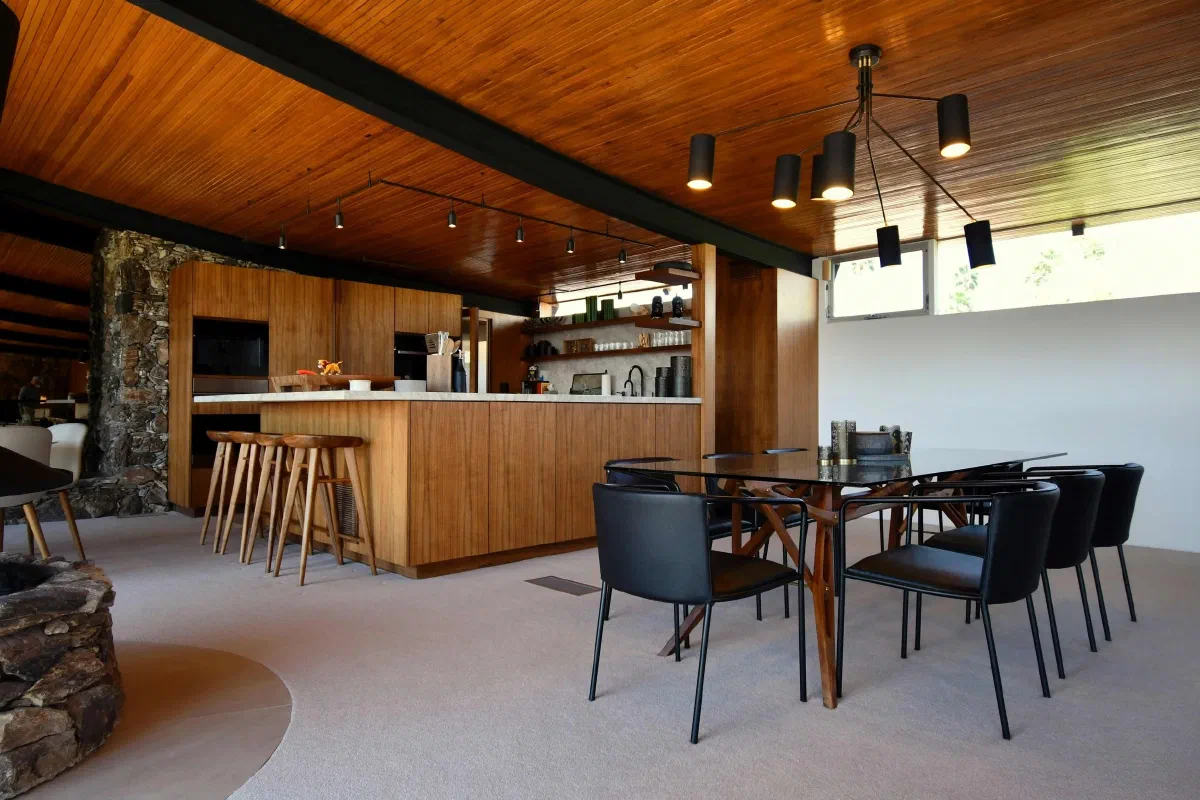
- Modern: Think clean lines, geometric shapes, and a focus on form and function. Materials like polished chrome, black iron, and glass are staples. A linear bar pendant or a multi-light chandelier with an abstract design would fit perfectly. For this look, I’d point you at the Kichler Winslow 5-Light Chandelier. Brushed nickel arms and clear seeded glass shades read as transitional-modern rather than trend-chasing, and Kichler is a name-brand American lighting manufacturer with a real warranty behind it, which matters more on a ceiling fixture than on a sub-$20 bulb. It’s rated 4.4 stars across 270 ratings.
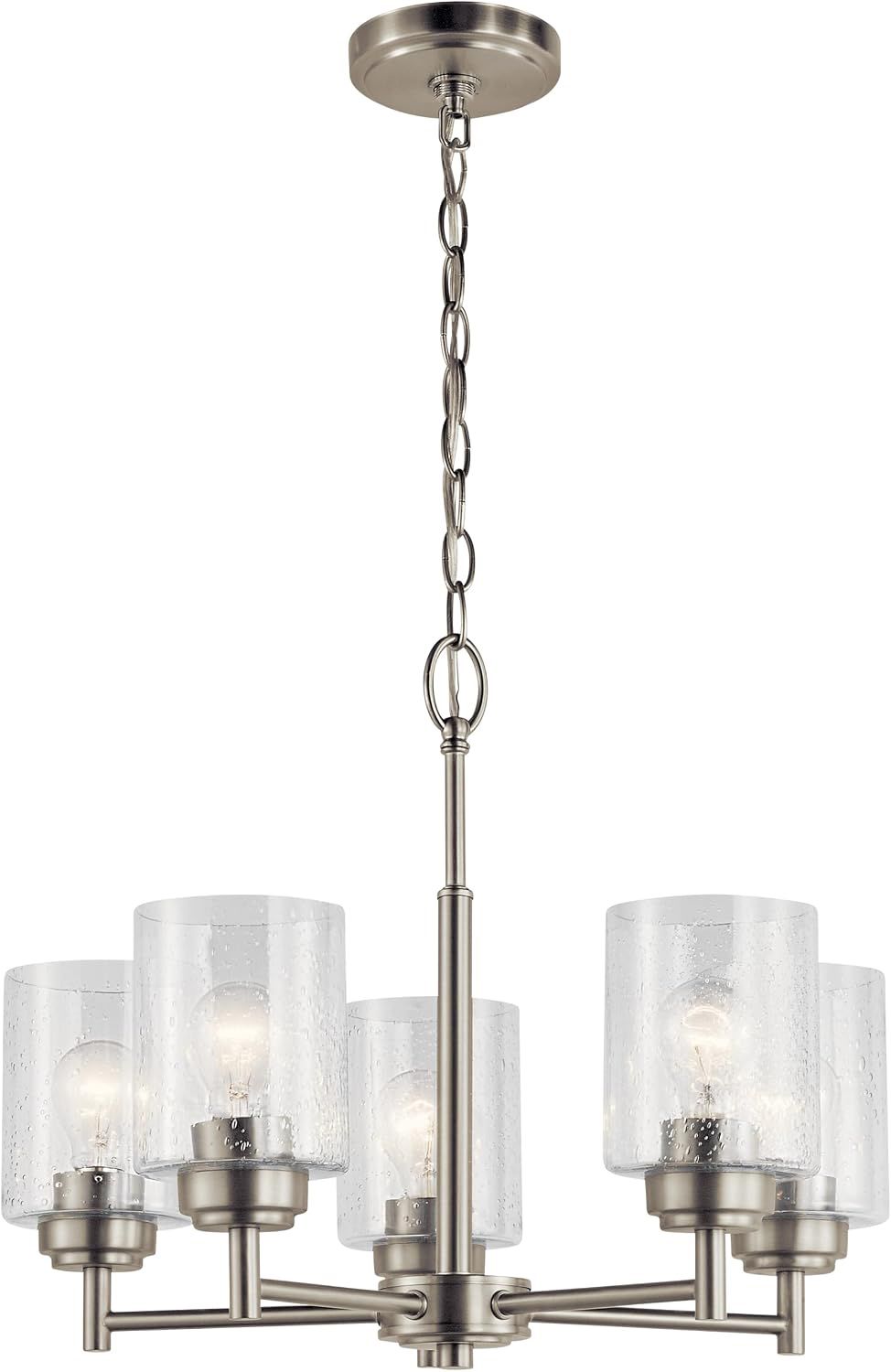 $144.59 price as of Sep 28
Honest con: at under 20" wide it’s sized for a 4-6 seat table, not a long banquet table; check the width-to-table-width rule above before you buy.
Buy the Kichler Winslow Chandelier on Amazon
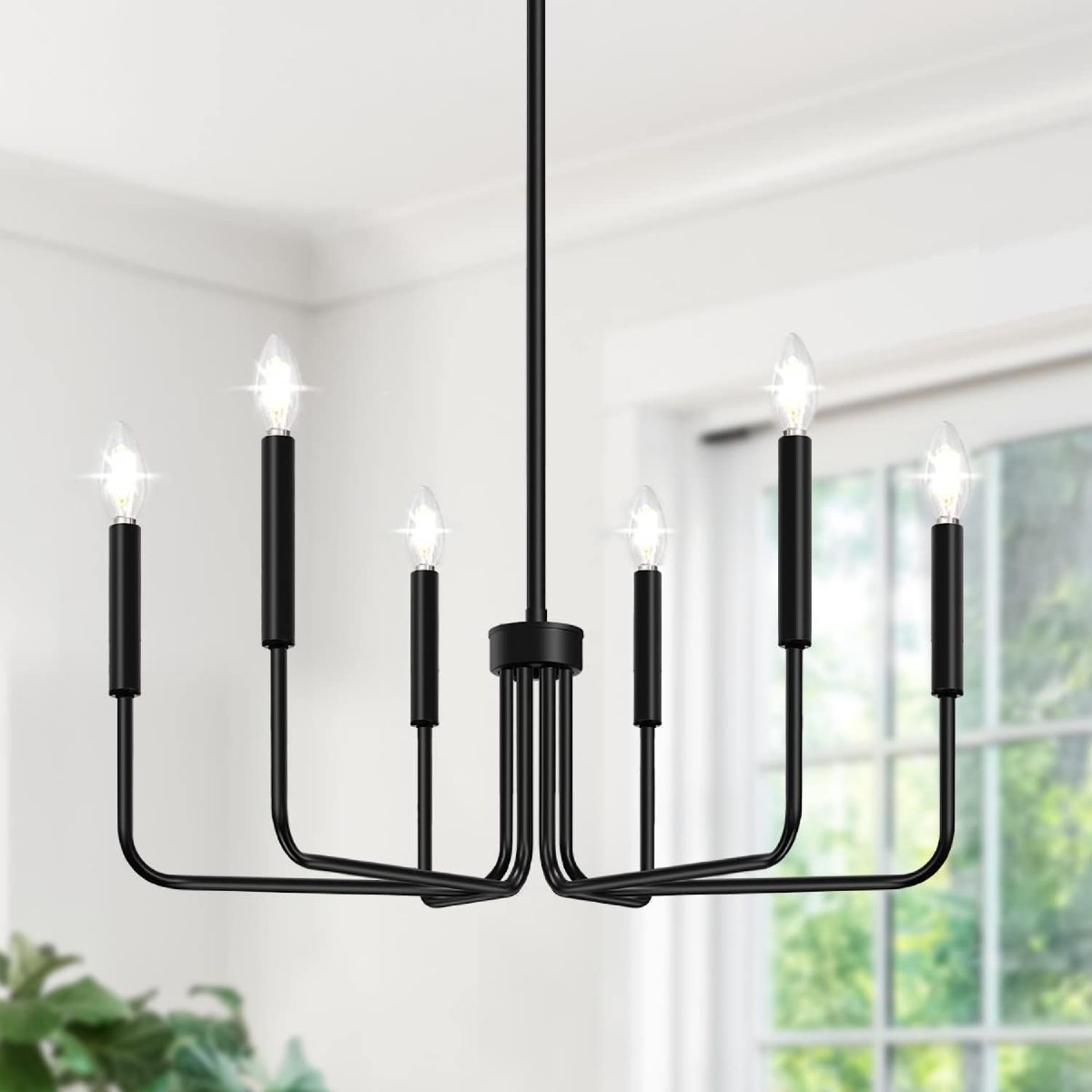
- Farmhouse: Warm, rustic, and inviting. Look for fixtures in wrought iron, wood, or distressed metals. A classic wagon wheel chandelier or a simple metal pendant with an Edison bulb would be a perfect fit. If you want that look without a designer-fixture price tag, the matte black 6-light candle chandelier is the one I’d reach for first: well under $50, a Best Seller badge, and over 1,600 ratings at 4.6 stars, which is a lot of real dining rooms validating the build quality at that price.
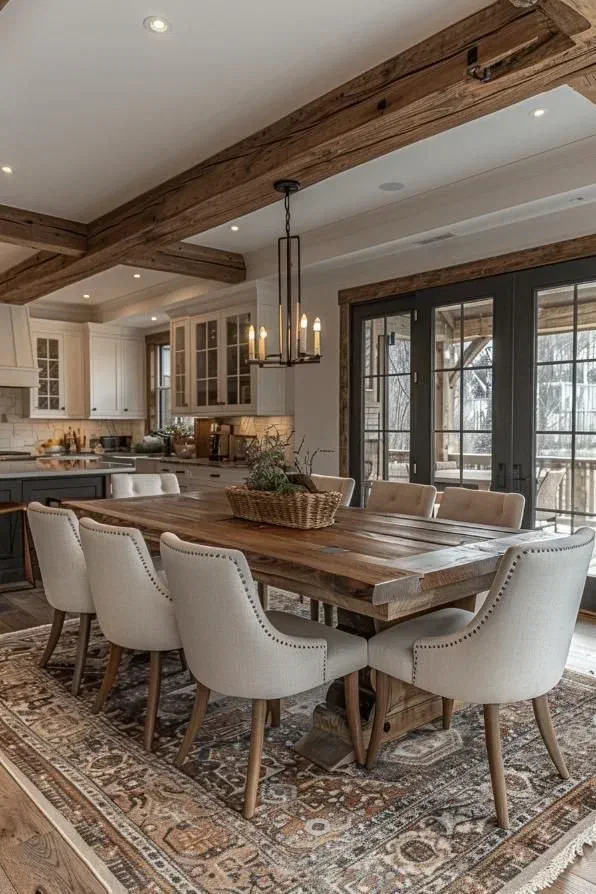
 $52.99 price as of Sep 28
Honest con: the E12 candle bases only dim if you add compatible dimmable bulbs and a separate dimmer switch. Neither is included, so budget for those if you want the mood-lighting effect the farmhouse look promises.
Buy the Black Farmhouse Chandelier on Amazon
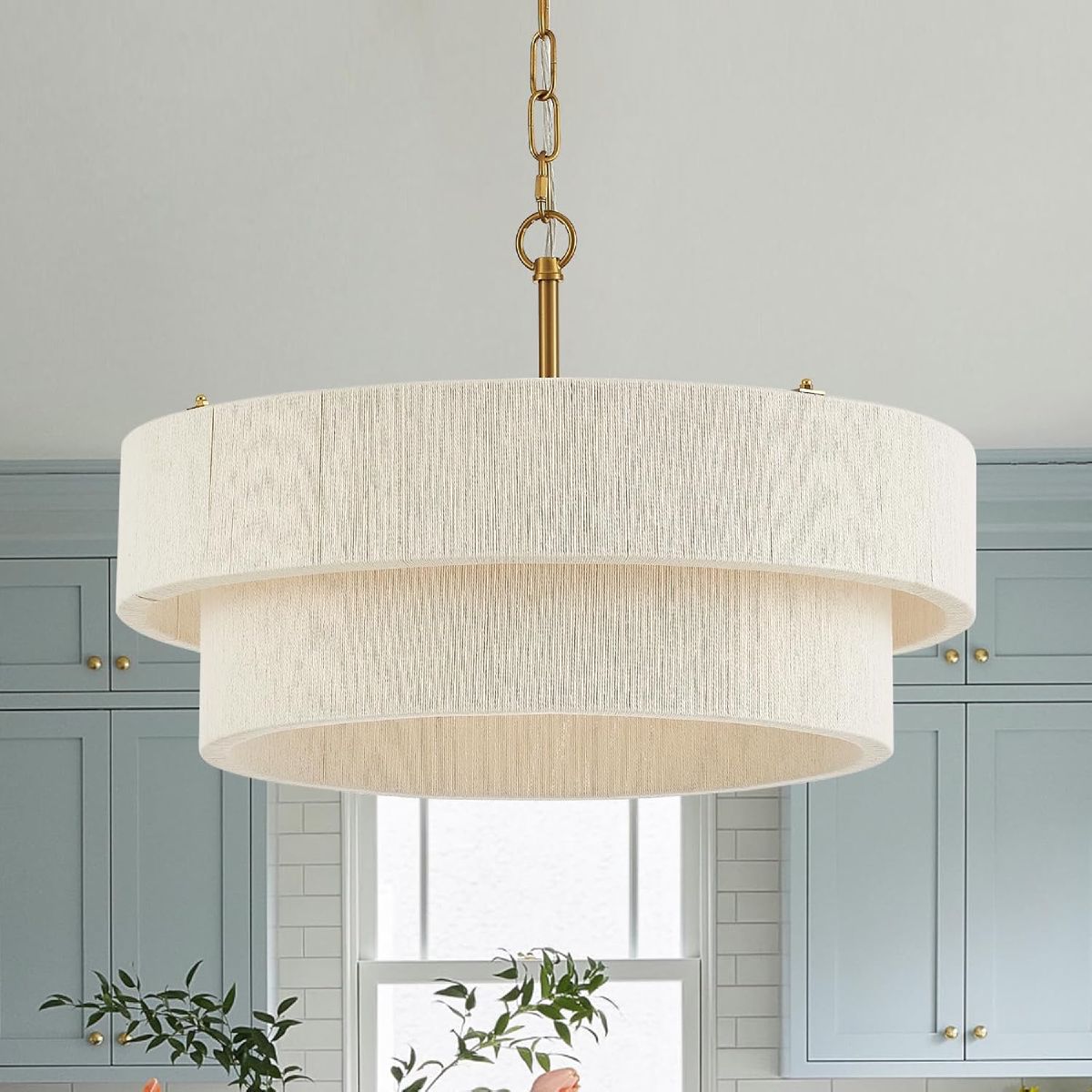
- Coastal: Bright, airy, and relaxed. Natural materials like woven rattan, rope, or whitewashed wood are key. A bead chandelier or a series of simple glass globe pendants can bring a seaside feel to your dining area. The two-tier hand-woven rattan pendant is the best version of this I’ve found on Amazon: it carries an Amazon’s Choice badge and 4.7 stars, and the double-layer weave actually diffuses the light rather than casting the harsh shadow-lines a single-layer rattan shade tends to.
 $139.99 price as of Sep 28
Honest con: it’s rated on a smaller review base (134) than the farmhouse pick above. Still comfortably past the point I’d trust a rating, but worth knowing if you weight review volume heavily.
Buy the Rattan Boho Pendant on Amazon
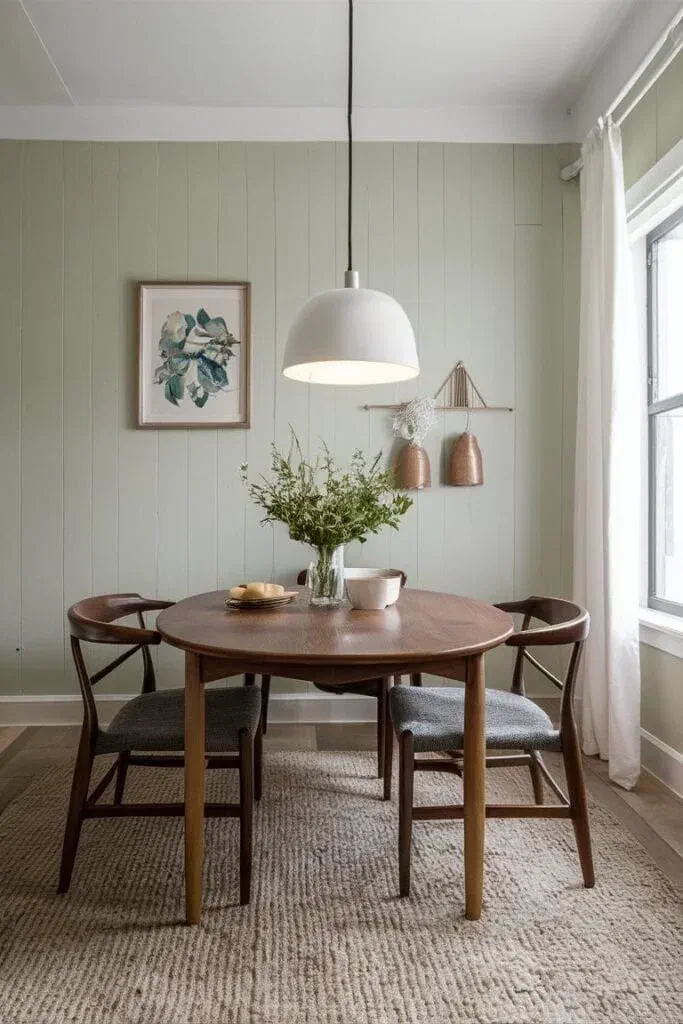
- Small Spaces: When space is limited, scale is everything. Avoid oversized, bulky fixtures. A semi-flush mount or a single, streamlined pendant will provide ample light without overwhelming a small dining room.
5. No overhead fixture, or an open-plan layout?
If you’re renting or just don’t have a ceiling box over the table, a swag kit gets you a real pendant anyway: hang it from a ceiling hook and run the cord to a nearby outlet. Floor lamps and wall sconces can carry the rest of the ambient and accent light in the meantime.
In a small dining room, one good fixture is usually all you need. In an open-plan space it’s doing double duty: a statement chandelier or a cluster of pendants doesn’t just light the table, it tells the eye where the dining area starts and the living area ends.
6. The bulb matters as much as the fixture
I’d default to warm, dimmable LEDs every time: 2700K to 3000K reads as cozy rather than clinical, and dimmable means the dimmer switch from section 3 actually does something. Smart bulbs and switches are worth it if you want to change color, set a scene, or turn the lights off from your phone without leaving the table, but they’re an upgrade on the basics above, not a substitute for them.
7. What to check before you buy
Past the style you’ve already picked in section 4, I’d look at three things: how the material holds up (some finishes show fingerprints and dust more than others, worth knowing before it’s hanging over a table people eat at), whether the build feels sturdy enough to last rather than flex, and what it actually costs once shipping and any dimmer/bulb extras are added in. Set that budget before you start browsing, not after you’ve fallen for something twice the price you meant to spend.
FAQs
How high to hang a dining room light?
A good rule is 30–36 inches above the table, but this can be adjusted based on the height of your ceiling and the size of your fixture.
What is best for low ceilings?
Flush mounts, semi-flush mounts, and even recessed lighting are all great options. Look for sleek, minimalist pendants that don’t hang down too far.
Should my foyer and dining room lights match?
They don’t have to match perfectly, but they should be in a similar style or have a complementary finish to create a cohesive flow throughout your home.
How to light a dining room without an overhead fixture?
Use a combination of wall sconces, floor lamps, and a plug-in swag pendant to create a layered and functional lighting plan.
That’s the whole method for dining room lighting: pick the fixture type that fits your ceiling and table, size it by the half-to-two-thirds rule, hang it 30-36 inches above the tabletop, and put it on a dimmer. For more inspiration read our room by room lighting guide!
When you’re ready to shop, our companion round-up, The Best Dining Room Chandeliers and Pendant Lights for Every Table, ranks six picks by table shape and budget and walks through the same sizing math above in more depth.