If your bedroom has one lighting fixture doing everything, task lighting is the fix: a small, adjustable light aimed at one job, reading, makeup or a desk, so you’re not squinting under an overhead bulb that was never meant for close work. Get the fixture and the placement right and you stop holding your book at odd angles, stop applying foundation that looks wrong the moment you step outside, and stop ending laptop sessions with a headache.
I’ve pulled together the fixture types worth buying for each of those three jobs, the placement heights and angles that actually matter, and the lumens/color temperature numbers to check before you buy, plus two picks I’d put in a bedroom myself.
Why task lighting is different from your ceiling light
Ambient lighting, your ceiling fixture or a floor lamp lighting the whole room, is there so you can move around safely. Task lighting is narrower: it aims light at one surface, your pillow, a vanity mirror, or a desk, and leaves the rest of the room alone.
You need it the moment a general-purpose light starts failing a specific job. Squinting at a novel and tilting it toward the one bright spot in the room is a sign your ceiling light isn’t reaching your pillow at a useful angle. Foundation that looks flawless under your bathroom light but off the second you step into daylight usually means your vanity is lit from the wrong direction, not that you picked the wrong shade. And if working from bed or a bedroom desk gives you afternoon headaches, the laptop screen is probably the brightest thing in an otherwise dim room, which is exactly the contrast that tires your eyes.
What all three have in common is directionality: the light goes where the activity is, not where the room’s main fixture happens to hang. That keeps it from disturbing a sleeping partner or flooding a room that’s supposed to feel relaxed. For how this fits with the rest of your bedroom’s lighting, see bedroom lighting basics.
The fixture I’d pick for each activity
The right fixture depends entirely on what you’re doing and where you’re doing it. Here’s how I’d match fixture type to task.
Reading in bed
I’d start with a wall-mounted swing-arm lamp over almost anything else here. The articulating arm, usually eighteen to thirty inches, lets you pull light precisely over your book, then swing it out of the way when you’re done, and it never eats up nightstand space the way a table lamp does.
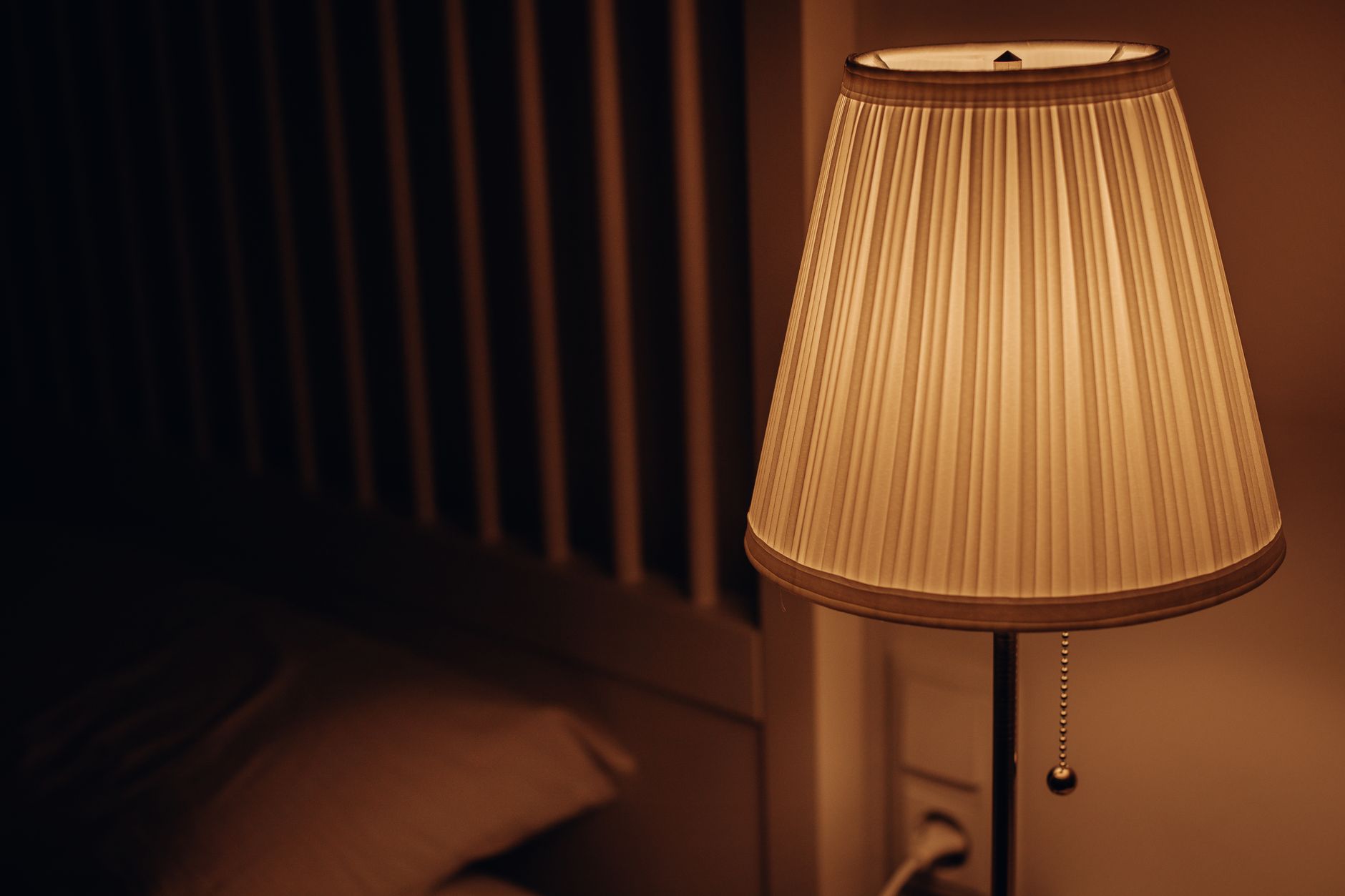
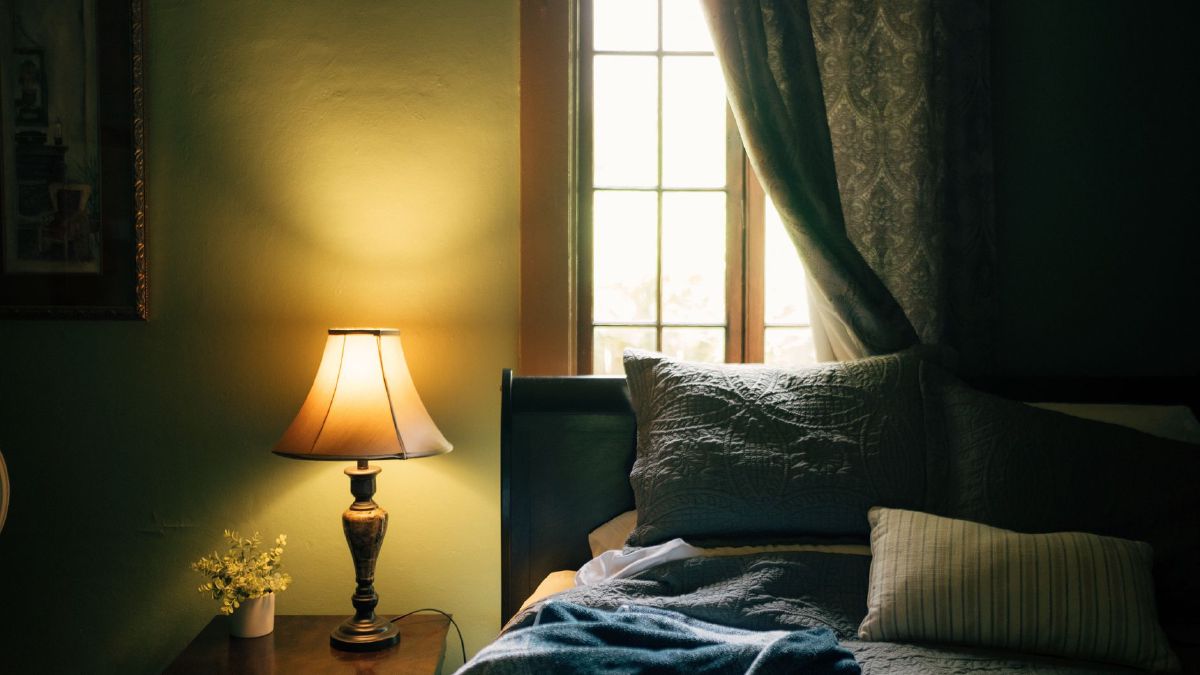
Clip-on reading lights work better if you read in more than one spot in the house, since they attach directly to the book or headboard and throw a focused beam that doesn’t glare off glossy paper. If you’d rather keep a bedside table lamp, look for an adjustable neck and a shade that points down at the page instead of out into the room.
Wall sconces are the tidiest permanent option, but only if you get the height right: twenty-four to thirty inches above the mattress top, close enough to reach the switch without sitting all the way up. That puts the light on your book at roughly a forty-five-degree angle instead of glaring back at you. I’ve rounded up the ones worth buying in best wall sconces for bedrooms.
Makeup at a vanity
The single biggest mistake I see is relying on an overhead bathroom light for this. Overhead light casts shadows under your eyes, nose and chin, which is precisely the detail you’re trying to check.
Lighted vanity mirrors with LED strips around the perimeter fix that by lighting your face from every direction at once, so no single shadow forms. Look for adjustable brightness and color temperature so you can match the light to wherever you’re actually spending the day.
Table lamps flanking the mirror at face height do a similar job for less money, as long as the shades are white or light-colored so the light diffuses instead of spotlighting one side of your face. Ring lights are worth considering too, especially if you also do video calls or photos from that spot: the same shadow-free light that flatters skin on camera works just as well for foundation.
Working from a bedroom desk
For laptop work, I want brightness without screen glare, which means an adjustable LED desk lamp with a gooseneck or articulating arm so the light lands on the keyboard and papers, not the monitor.
Multiple brightness settings and adjustable color temperature matter more here than they sound: cooler light keeps you alert during the day, warmer light feels less jarring in the evening. A few desk lamps now fold in USB charging or a wireless charging base, which is genuinely useful if your desk doubles as a nightstand. For fixtures built with this in mind, see best LED lights for bedrooms; if you’d rather the lamp adjust color temperature on its own through the day, smart bulbs for connected bedrooms covers that angle.
If I could only recommend one bedroom desk lamp, the Honeywell LED Desk Lamp would be it. A bedroom desk does double duty (late-night emails one hour, a morning makeup check the next), and this lamp’s CRI ≥94 colour accuracy plus four temperature modes spanning 2700K to 5700K handle both jobs without swapping bulbs, with touch dimming to take the level down gently after dark. Close to 900 buyers have settled it at 4.8 stars. The trade-off: the foldable arm is shorter than a proper swing-arm, so on a wide desk you’ll find yourself repositioning the whole lamp rather than swinging the head across.
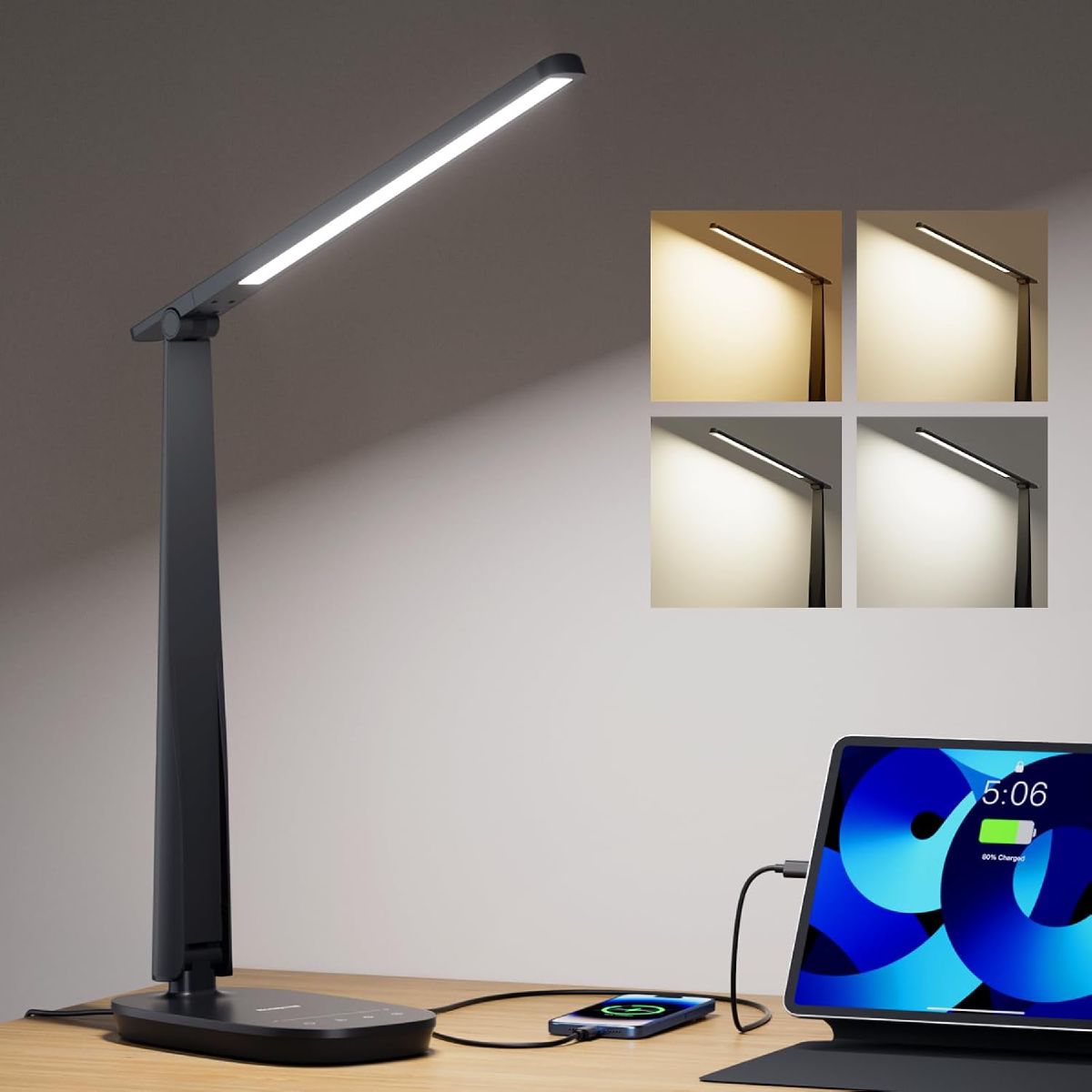 $32.29 $33.99 5% off price as of Sep 28
Buy the Honeywell LED Desk Lamp on Amazon
No room for a desk at all? A clamp-on lamp fixed to a shelf or headboard gives you full-size desk lamp performance without claiming any surface space, and an adjustable-head floor lamp beside the bed or reading chair works nearly as well.
Where to Put Task Lighting in a Bedroom
I’ve seen good fixtures ruined by bad placement more often than I’ve seen a cheap lamp fail outright. A few numbers make the difference.
Reading lights
Mount a wall light or sconce with its center twenty-four to thirty inches above the mattress top. That puts your book at roughly a forty-five-degree angle to the light, bright enough to read by without the glare of staring straight into the bulb. Sleep with a stack of pillows or a tall headboard? Move it up from there.
If it’s wall-mounted, I’d keep the fixture’s center twelve to eighteen inches from the edge of your pillow, close enough to reach without sitting fully up. For a table lamp instead, put it on a nightstand roughly level with your mattress top, base fifteen to twenty inches from the pillow.
Vanity lighting
Face the vanity toward a window if you can. Light from behind you just throws your own shadow onto the mirror. With artificial light, keep the fixtures at face level rather than above: wall sconces or table lamps with their centers roughly at eye height when you’re seated.
The one placement I’d actively avoid is a single light directly over the mirror. That’s what causes the classic overhead-shadow look under your eyes and chin. If overhead is genuinely your only option, add a table lamp or lighted mirror to fill the shadows back in.
Desk placement
Keep the lamp fifteen to thirty-six inches from your work area, closer for a dimmer lamp, farther for a bright one. Right-handed? Put it on your left so your hand isn’t casting a shadow over your own writing. Left-handed, flip it.
Angle it so light lands on the keyboard and papers, not your eyes or the monitor. A thirty to thirty-five-degree angle onto the desk surface avoids both glare and the harsh hotspot you get from pointing a lamp straight down.
Lumens, color temperature and CRI, by activity
Reading only needs around 400 lumens when the beam is focused on the page. Makeup wants more overall brightness, but spread evenly rather than concentrated, which is why lighted mirrors use several low-wattage bulbs around the frame instead of one bright source.
Color temperature (measured in Kelvin) is worth checking before you buy, not after. Warm white, 2700K to 3000K, is what I’d use for reading: it’s comfortable in the evening and doesn’t fight your body’s melatonin production the way cooler light does. Makeup needs the opposite: 5000K to 6000K daylight tones show your skin the way it’ll actually look outside, which is the whole point of the “bathroom lighting looked fine” complaint. Desk work sits in the middle, 3500K to 4500K, neutral enough to keep you alert without feeling clinical.
CRI (how accurately a light renders color against natural sunlight’s perfect 100) matters less for reading, where anything above 80 is fine, and more for makeup and detailed work, where I’d look for 90 or higher so subtle color differences don’t disappear. It’s usually printed on the packaging or the product page; check before you buy rather than guessing from the Kelvin number alone.
Small-Bedroom Solutions and Space-Savers
Compact bedrooms make task lighting harder, since there’s rarely spare surface for a lamp. Wall-mounted fixtures solve most of that: they free the nightstand for books and a water glass instead of a lamp base.
A plug-in swing-arm sconce is the option I’d point renters toward, since it gets you the look of a hardwired fixture with none of the electrical work. Mount the backplate like a picture frame, plug the cord into a nearby outlet, and use a cord cover to keep the cable from looking like an afterthought.
For this exact use case I’d look at the dimmable swing-arm sconce with a built-in USB port. It folds phone charging into the same fixture, which earns its keep in a bedside reading nook where your phone, book, and lamp all compete for the same six inches of nightstand. Honest con: it only dims with compatible LED or halogen bulbs, so check what you’re pairing it with before you buy.
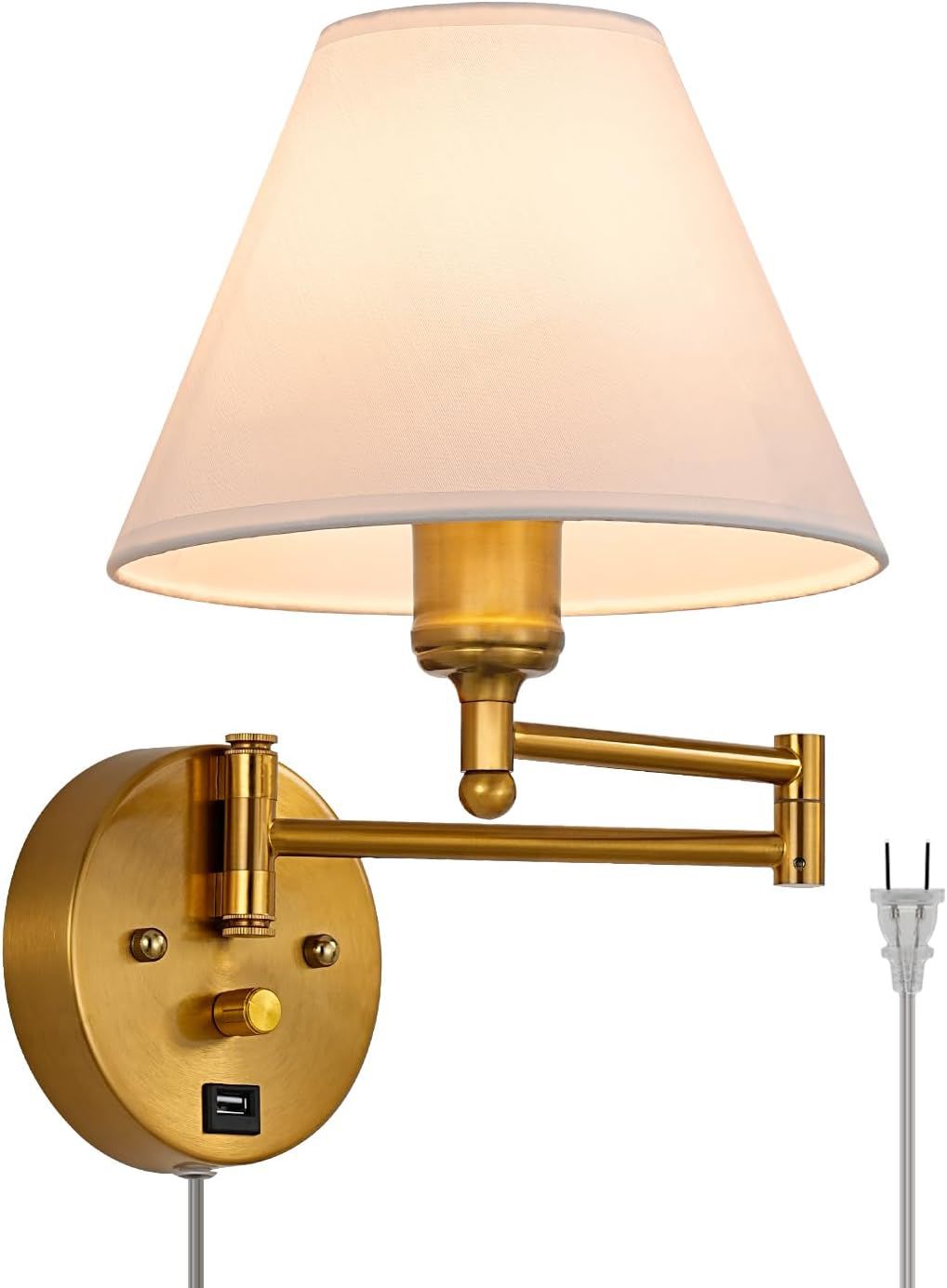 $49.99 price as of Sep 28
Buy the Dimmable Swing-Arm Sconce with USB Port on Amazon
Clip-on lamps that attach to a headboard, shelf, or bed frame are the other zero-footprint option. Modern versions have adjustable necks and enough brightness settings to double as your main reading light rather than a backup.
For desk work, a clamp-on lamp fixed to a shelf or desk edge keeps the whole work surface free for your laptop. If clamping isn’t practical, an adjustable-head floor lamp beside the bed or chair does the same job. Corner space is worth using too: a floor lamp tucked between the bed and nightstand, or a corner shelf with a built-in reading light, claims a spot that’s usually wasted anyway.
Styling Task Lighting So It Doesn’t Look Bolted On
Function shouldn’t mean ugly. I’d match finishes to whatever hardware is already in the room, drawer pulls, curtain rods, the bed frame, since brass, brushed nickel and matte black all read as intentional across most bedroom styles, and oil-rubbed bronze or polished chrome suit more specific looks.
Pair fixtures that share a design language rather than buying each one in isolation: a wall-mounted reading sconce and a desk lamp in the same finish, or a vanity mirror whose LED strip roughly matches your bedside lamps’ color temperature. And treat task lighting as one layer of the room’s full layered lighting scheme, not a fixture you bolt on afterward, so it works alongside your ambient and accent lighting rather than fighting it.
Put dimmers on everything you can. A reading light that’s right for an afternoon novel is usually too bright at midnight, and a dimmer solves that without needing a second lamp. It’s also fine, even preferable, to run different color temperatures side by side: warm 2700K bulbs by the bed and cooler 5000K at the vanity, since those two lights rarely run at the same time anyway. For more picks built around this exact mix, see best bedside lamps.
Frequently Asked Questions
Can I use a floor lamp for bedside reading instead of wall-mounted fixtures?
Yes, floor lamps work well for bedside reading when chosen and positioned correctly. Look for models with adjustable heads that let you direct light onto your reading material, and position the lamp so its head sits approximately at mattress height when fully extended. Floor lamps are also portable: move them between your bed and a reading chair as needed. The trade-off is that they consume floor space and require an outlet within cord length of your desired location. For small bedrooms, wall-mounted fixtures or clamp-on lights might serve you better; floor lamps make more sense in larger rooms or flexible spaces.
How do I prevent glare when reading from a tablet or e-reader?
Backlit devices create different lighting challenges than traditional books because the screen itself produces light. Position your task light to illuminate the space around your device rather than shining directly at the screen, reducing contrast between the bright screen and dark surroundings. This ambient-task lighting approach prevents eye strain while maintaining comfortable reading conditions. Turning on your e-reader’s built-in light, if it has one, also cuts down how much you need from an external task light. Many readers find that warm color temperature lights (2700K-3000K) work better with backlit devices than cooler temperatures, as they create less visual conflict with the screen’s light.
Should makeup lighting match my bathroom lighting or the natural light where I’ll be?
Always prioritize matching the environment where you’ll spend your day. If you’re heading outdoors or to an office with natural light, use daylight-temperature bulbs (5000K-6000K) at your vanity to replicate these conditions. For evening events under warm artificial lighting, slightly warmer makeup lighting (4000K-4500K) better reflects the environment. Many makeup artists recommend having adjustable color temperature vanity lighting that switches between settings, allowing you to match different situations. If you must choose one temperature, daylight (5000K-6000K) reveals the most accurate colors and prevents common makeup mistakes.
What’s the difference between a task light and a reading light?
Reading lights are a specific type of task light optimized for reading’s particular requirements: focused, adjustable illumination that reaches your book without creating screen glare or disturbing others. Task lights encompass a broader category including any focused lighting for specific activities like cooking, crafts, or computer work. All reading lights are task lights, but not all task lights work well for reading. Reading-specific fixtures typically feature adjustable arms or heads, focused beam patterns, and lower brightness levels (400-450 lumens) compared to task lights for detailed work like sewing or drafting, which might require 800-1100 lumens or more.
How many task lights do I need in my bedroom?
The number depends on your activities and room size. At minimum, most bedrooms benefit from bedside reading lights on both sides of the bed if two people share the space, allowing independent control. Add a desk lamp if you work from your bedroom, and vanity lighting if you apply makeup there. Small bedrooms might need only two or three task lights total, while larger rooms with multiple activity zones could use five or more. Remember that task lighting works alongside your ambient lighting. You’re not trying to light the entire room with task lights alone, just the specific areas where you perform focused activities.
Task lighting is one layer of three. For the full plan, including ambient and accent layers, see our Guide to Bedroom Lighting: Cozy and Functional Ideas.